
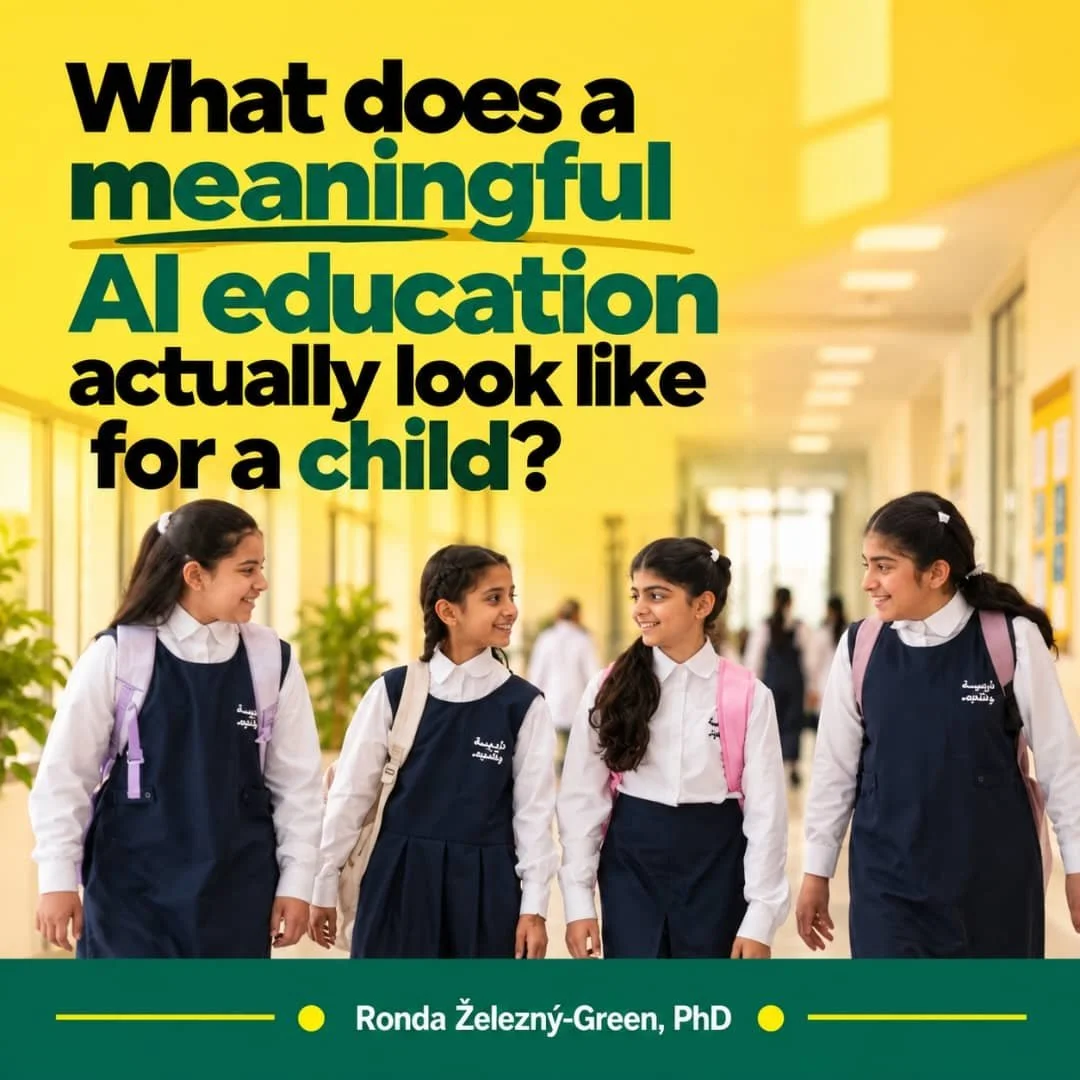
The UAE just became the first country in the world to make artificial intelligence education mandatory from kindergarten through Grade 12.
I have been watching countries respond to AI in education for a while, and most of what I see are committees, task forces, and moratoriums. New York City paused AI tools in schools. Norway came close to banning them. The instinct in a lot of places is to slow down, to wait until we understand this better, to protect children from something we are not sure about yet.
The UAE went the other direction entirely.
What caught my attention is not just that they mandated it, but how they are thinking about younger children. In the early grades, students are not sitting in front of ChatGPT. They are spotting errors in AI outputs. They are identifying unfair or biased results. One activity has the teacher playing the role of a robot, acting out how an AI system might respond, so children can see the mechanics of it before they ever interact with a real system. The goal is not fluency with a tool. It is critical thinking about what the tool is and what it gets wrong.
Henry Price, who advises on digital learning for young children, put it simply: we want children who use AI to ask better questions.
This approach seems genuinely unique because it could nurture children who know what to ask when using AI, who know when to push back, and who understand that the AI output is never the final word.
The UAE’s approach may encounter implementation challenges, and it certainly will not translate directly to every context not least because of its cost. But the underlying question it is asking is the right one: if AI is going to be part of how children learn and work and live, what does it mean to prepare them for that honestly, from the beginning? Most countries are still deciding whether to answer that question. The UAE decided to answer it with a curriculum, and that is commendable! I look forward to learning more about the project as it unfolds.