
eLearning 2026 : Human-Centered and Inclusive AI for African Education Systems (EN/FR)
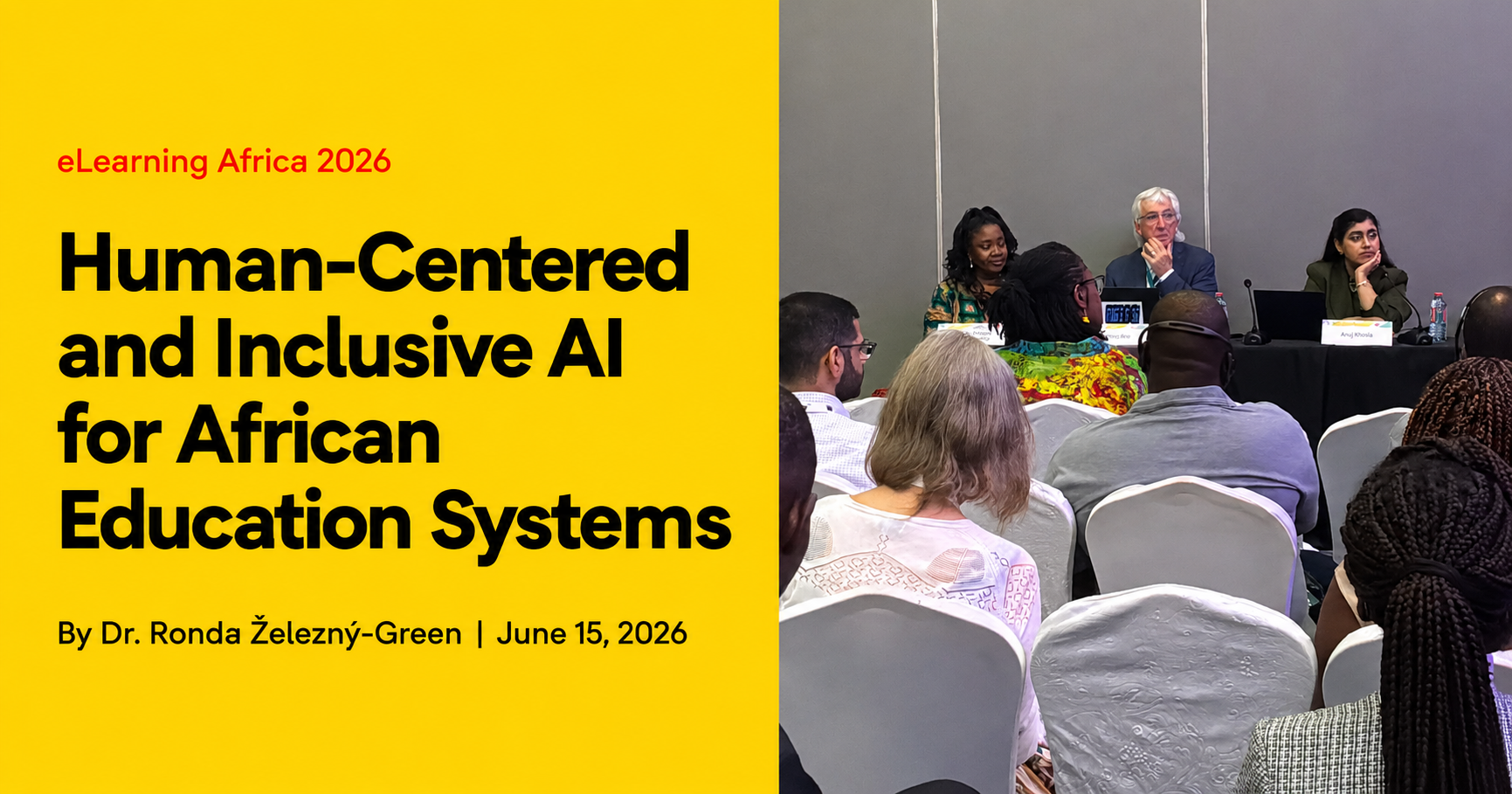
Some rooms broaden your perspective on certain things.
I sat in the audience for this one, and there is something different about being in a room where you are not responsible for the conversation. You get to just listen and Session AIT08 at eLearning Africa 2026 in Accra gave me a lot to listen to.
The session was “Human-Centered and Inclusive AI for African Education Systems”, chaired by my colleague and datocracy collaborator Habib Houndekindo. The framing was exactly right for where we are because the question that guided the session was: “As AI embeds itself into education systems across the continent, who gets to decide how it shows up? Whose expertise does it strengthen and whose does it displace?”
Three speakers took on different corners of that question, but it was Rosalin Abigail Kyere-Nartey from the Africa Dyslexia Organisation in Ghana who most had me riveted.
Rosalin spoke about building NeuroAI Africa, an African-led AI infrastructure for inclusive learning and digital sovereignty. But before she got to the infrastructure, she told us about herself. About leading with dyslexia. About what it means to navigate systems that were never designed with you in mind and to build something new because the existing options were not enough.
I have heard a lot of presentations about inclusion. Most of them described it from the outside. Rosalin described it from the inside. That is a different thing entirely. It is the difference between a framework and an experience.
What she is building with NeuroAI Africa matters because it starts from the right place. Not “how do we adapt existing AI tools for neurodiverse learners?” but “what does an African-led AI infrastructure look like when it is designed from the start to include people the current system renders invisible?” That is the question that produces different answers.
Aruj Khaliq from the University of Oxford, another panelist, also raised something I keep turning over – the paradox of teacher agency in the age of AI. What happens to human expertise when the machine can think? It is not a simple question, and she did not pretend it was.
These are the types of conversations that eLearning Africa 2026 kept creating space for. Not AI as an inevitable tide to adapt to, but AI as a set of choices about design, about governance, about whose knowledge counts.
I left that room with more clarity than I arrived with. That is usually the sign of a good session.