
Building AI Literacy with Your AUNTIE: Where Indigenous Futures Transcend
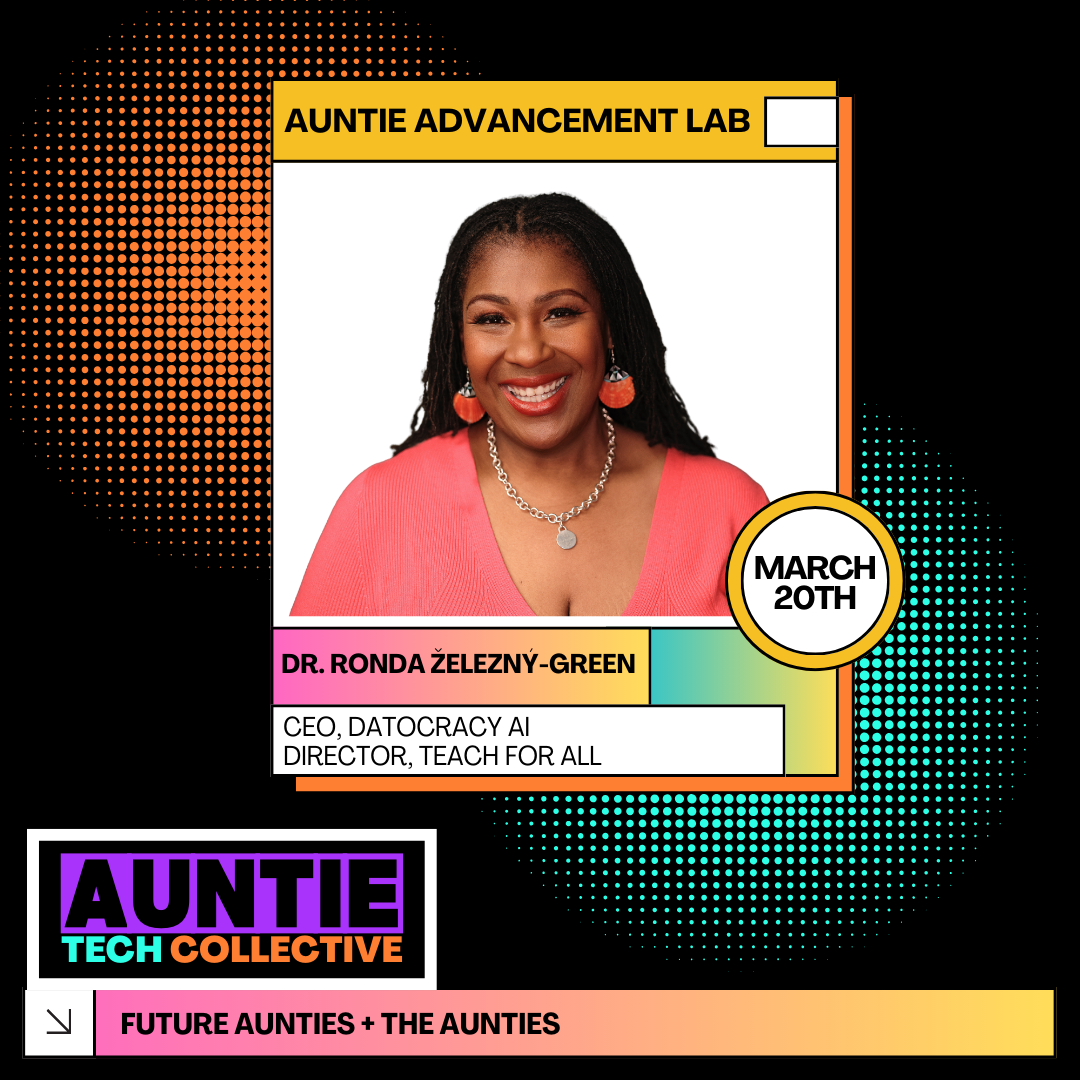
Why I’m facilitating an AI workshop for the AUNTIE Tech Collective and what it means for the movement
This year’s Women’s History Month theme is “Leading the Change: Women Shaping a Sustainable Future.” I love this framing because it names what so many of us already know: sustainability isn’t only environmental. It’s about financial resilience, community strength, leadership succession, and intergenerational equity. It’s about building systems that work long after we’ve left the room.
For Indigenous women, Two-Spirit, and nonbinary people in tech, that work has always been relational. It is rooted in accountability to community, to future generations, and to the land. And yet, when it comes to AI, the communities with the most at stake are consistently the last ones invited to the table. Not because we lack the capacity, but because the table wasn’t built with us in mind.
The Numbers Tell the Story
According to the UN, an estimated 476 million Indigenous Peoples live across 90 countries, representing over 5,000 distinct cultures, yet decisions about AI are routinely made without their input. The UN Permanent Forum on Indigenous Issues recognized this in its 2025 recommendations, calling for meaningful inclusion of Indigenous Peoples in AI development, governance, and application. And as the UN has noted, without proper safeguards, AI risks reinforcing harmful biases and leading to further appropriation of Indigenous culture and knowledge without consent.
In the United States, the digital divide makes this even more urgent. According to the FCC’s 2024 broadband deployment report, approximately 23% of people living on Tribal lands lack access to high-speed internet, compared to about 7% of the general U.S. population. On the Navajo Nation, only 33% of households have a broadband subscription. When basic connectivity remains out of reach for so many, participating in conversations about AI governance can feel impossibly far away.
Don’t Get Played
That’s exactly why spaces like the AUNTIE Tech Collective matter. AUNTIE is a multi-generational, culturally centered collective that equips Indigenous womxn, Two-Spirit, and nonbinary people with the skills, support, and community needed to thrive in technology. If you don’t know about them yet, you should.
This Women’s History Month, I’m honored to facilitate the next AUNTIE Advancement Lab: AI & AUNTIE – Don’t Get Played on March 20. Together, we’ll dig into how generative AI actually works (and where it falls short), how to spot and avoid AI slop, how to verify outputs and use these tools responsibly, and how Indigenous values like data sovereignty and relational accountability should shape the way we engage with this technology.
Why This Matters
As a woman with Lumbee ancestry leading this work, I carry an understanding of what it means when technology is designed without your worldview in it. Indigenous peoples have always been scientists, builders, and visionaries. Our knowledge systems have sustained communities for millennia. That lived understanding shapes how datocracy approaches AI literacy.
We don’t treat AI as a universal tool that lands the same way everywhere. Our approach is rooted in context: the languages people speak, the devices they use, the connectivity they have access to, the cultural values they carry, and the power dynamics they navigate every day. A government official in The Gambia assessing an AI procurement decision, an MSME owner in Senegal figuring out how to use data responsibly, a young professional in Kenya building their first AI workflow: each of these people needs something different, and datocracy is designed to meet them where they are.
That’s also what makes collaborations like this one with the AUNTIE Tech Collective so important. When we combine Indigenous-led tech collectives with Global Majority capacity building, we’re modeling what context-rooted AI literacy looks like in practice: shaped by community, accountable to culture, and built to last across generations.
An Invitation
If you’re an Indigenous woman, Two-Spirit, or nonbinary person in tech and you’re not yet part of the AUNTIE Tech Collective, come join. This community exists to build skills, relationships, and pathways in tech together. And if you’re a funder, policymaker, or ally reading this, pay attention to what’s happening here. This is what movement-building looks like: grounded, relational, and led by the people closest to the work.
Register for the AUNTIE Tech Collective community and the March 20 workshop at aises.org/auntie-tech-collective.